
Disc injuries can cause pain, stiffness, and reduced movement in the neck or lower back. For some people, symptoms may stay local, while for others they may travel into the buttock, leg, shoulder, or arm depending on the area involved.
At Top Life Chiropractic, we take time to assess disc-related pain carefully to understand what may be contributing to your symptoms, irritation, or reduced mobility.
Disc Injury/ Disc bulge
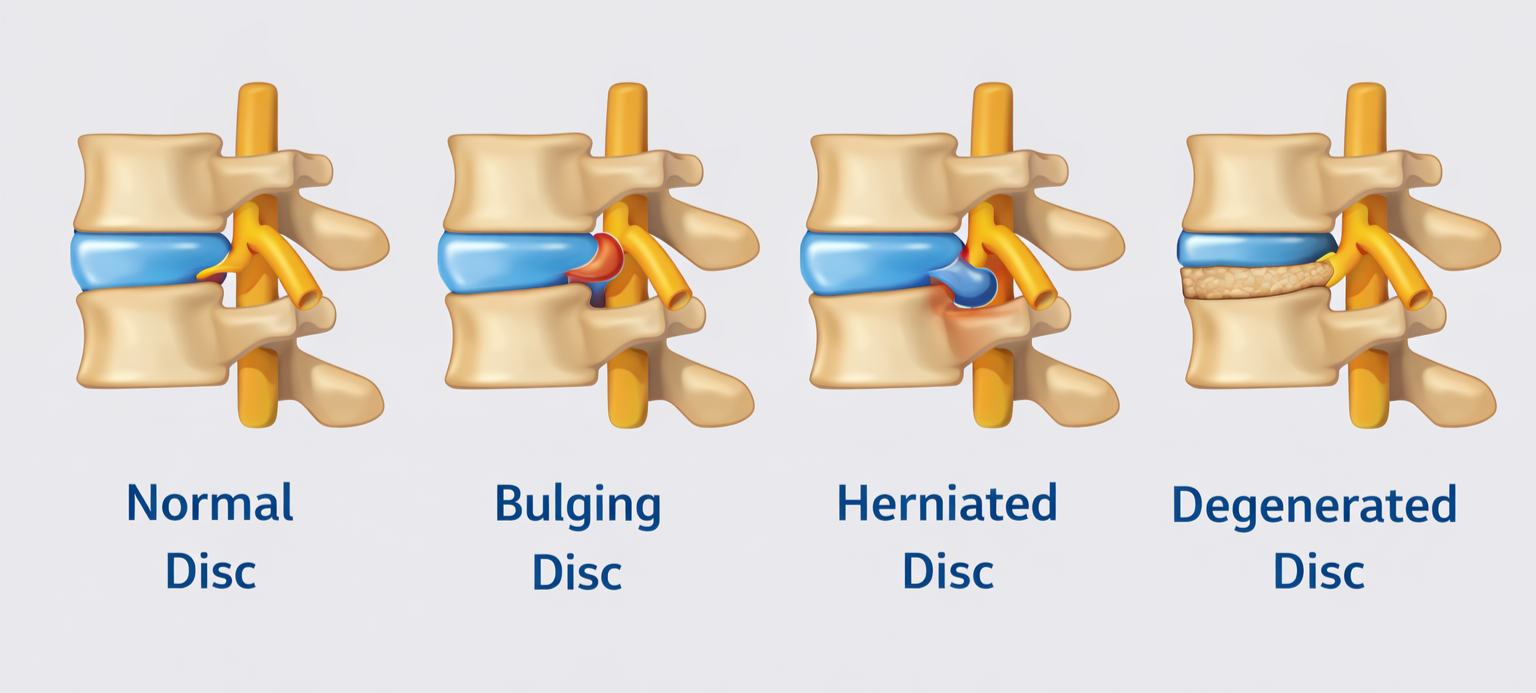
Disc problems can range from early irritation and bulging to more significant herniation or degeneration.
A proper assessment helps determine what may be contributing to your symptoms.
Common symptoms
lower back or neck pain
pain when bending, sitting, or getting up
stiffness and reduced movement
pain that travels into the buttock, leg, shoulder, or arm
tingling or pins and needles
numbness
weakness or reduced comfort with daily movement
Our approach
At Top Life Chiropractic, our focus is to assess the spine thoroughly, using a specific and detailed approach to better understand where the problem may be coming from.
This may involve examining your posture, movement, spinal balance, and areas of restriction, and using the Gonstead method to determine which areas may require care.
In some cases, further imaging such as X-ray or MRI may be recommended if clinically indicated. This can help provide more information about the spine and better understand whether disc involvement or other structural factors may be contributing to your symptoms.
Our goal is to provide chiropractic care that is precise and tailored to your body.
How chiropractic care may help
Chiropractic care aims to identify and address areas of spinal dysfunction that may be contributing to disc-related pain, stiffness, or reduced mobility.
By improving joint movement and spinal function, care may help reduce tension, improve comfort, and support better day-to-day movement.
Every patient is different, which is why we tailor care based on your presentation and findings.